

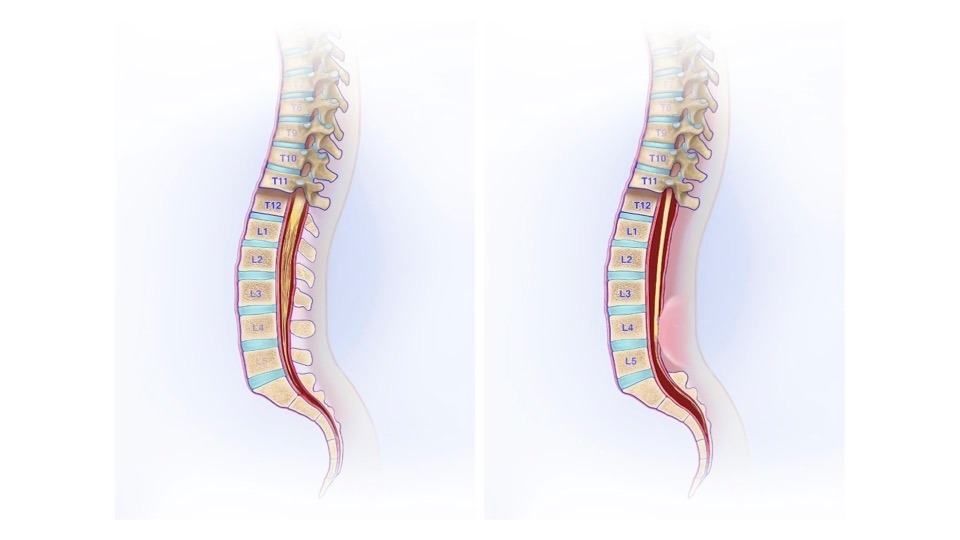
It is a condition in which the lower end of the spinal cord is abnormally low and tightly attached within the spinal canal. It is usually a congenital developmental variation. It may also be referred to as a thickened filum terminale, fatty filum, or tethered cord.
How is tethered cord syndrome recognized?
In childhood:
• Dark birthmark over the lower back
• Excess hair growth
• Skin dimple
• Nighttime bedwetting
In later years:
• Low back and leg pain
• Weakness and sensory loss
• Bladder–bowel control problems
• Scoliosis may occur.
How is the diagnosis made?
MRI is the gold standard. MRI evaluates:
• A conus medullaris located lower than normal
• Thickened filum terminale or presence of a lipoma
What happens if it is not treated?
Untreated cases may develop:
• Syringomyelia
• Nerve conduction problems
• Permanent motor and sensory deficits
How is tethered cord syndrome treated?
The main treatment is detethering (surgical release of the spinal cord).
Non-surgical approaches are generally supportive and aimed only at symptom relief.